One number that tells you how well you’re really eating.
Calorie counting tells you how much. Health Score tells you how well. A single 0–100 metric that captures macro balance, micronutrient coverage, dietary diversity, and consistency — updated weekly so you always know where you stand.
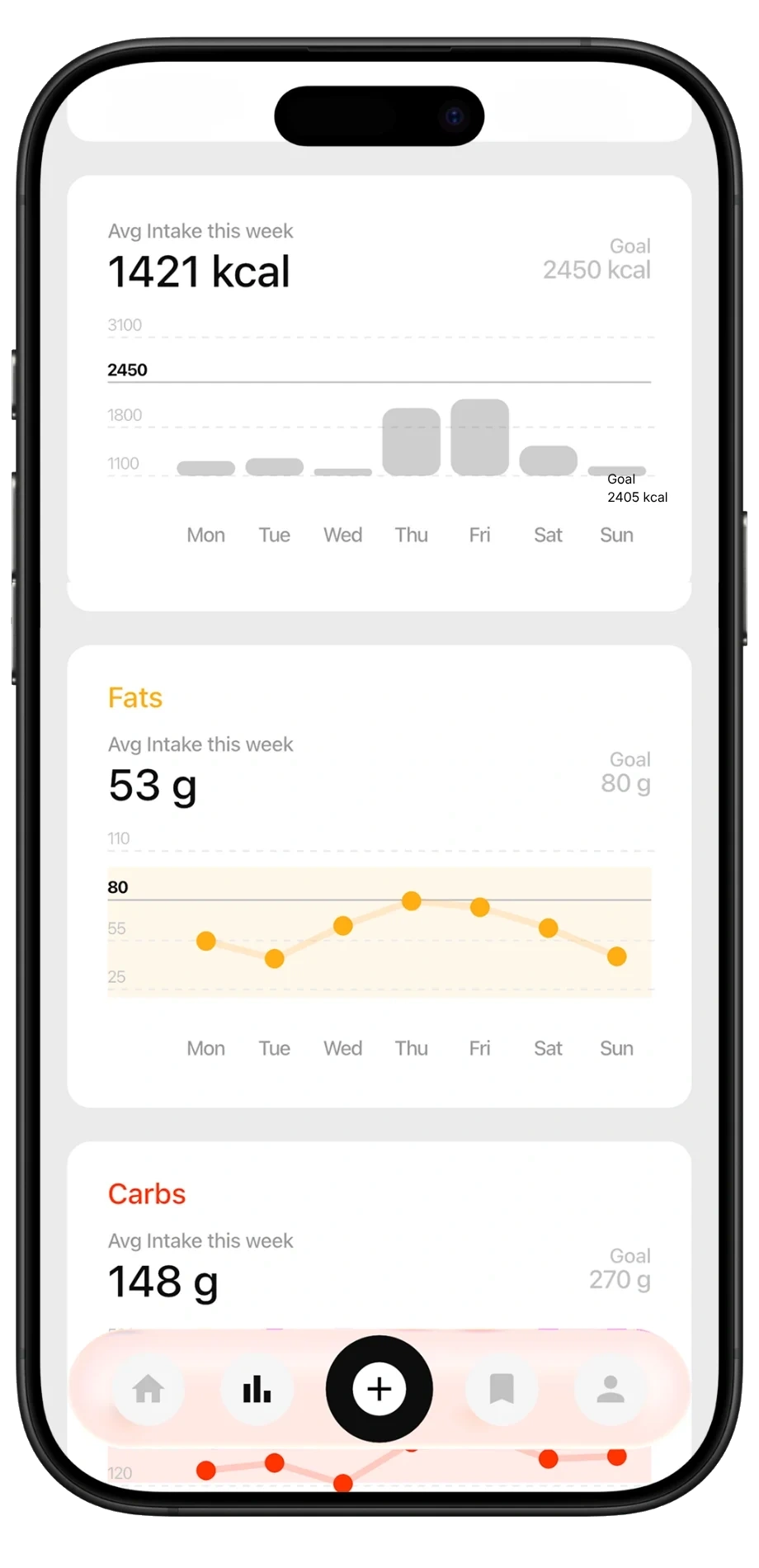
More than a number. A complete picture.
Your Health Score is a calculated metric from 0 to 100 that reflects how nutritionally complete your diet actually is. Not just calories. Not just macros. The full picture — including the 245 micronutrients most apps completely ignore.
It combines four dimensions: macro adherence (are you hitting your protein, carb, and fat targets?), micronutrient coverage (what percentage of 245 nutrients are meeting their RDA?), consistency (are you tracking regularly?), and dietary diversity (are you eating a variety of foods or the same three meals on repeat?).
No other nutrition app has this. Most stop at calories. The ambitious ones track macros. Acai gives you a single, actionable number that captures everything.
Four pillars. One score.
Macro Adherence
How closely you hit your personalized protein, carbohydrate, and fat targets each day. Consistently landing within range across all three macros scores highest. Wild swings or chronic under/overshooting pulls the score down.
Micronutrient Coverage
What percentage of the 245 tracked micronutrients are meeting their RDA-based targets. This is where most diets fall apart — even “healthy” ones. Hitting 80% of your vitamins and minerals is the difference between feeling fine and feeling great.
Dietary Diversity
Variety matters. Eating the same chicken-rice-broccoli combo every day might hit your macros but leaves micronutrient gaps. This pillar rewards you for eating a wide range of foods — different proteins, vegetables, grains, and fruits throughout the week.
Consistency
The best diet is the one you actually follow. This pillar measures tracking frequency — are you logging meals regularly or only on “good” days? Consistent tracking is the strongest predictor of long-term nutritional improvement.
What your score actually means
Major deficiencies across multiple micronutrients. Macros likely imbalanced. Your body isn’t getting the raw materials it needs. The good news: even small changes move the needle fast from here.
You’re covering the basics but leaving gaps. Probably decent on macros, but micronutrient coverage is inconsistent. Adding more variety and nutrient-dense foods will push you into the next tier quickly.
Strong foundation. Macros are mostly on target. You’re covering many micronutrients but likely have a few persistent blind spots — common ones like vitamin D, magnesium, or omega-3s. Targeted adjustments will get you to excellent.
You’re nailing it. Macros aligned, micronutrients well-covered, diet is diverse, and you’re tracking consistently. This is what optimal nutrition looks like — not perfection, but comprehensive coverage across all dimensions.
Watch your score improve week over week
Your Health Score updates weekly, giving you a clear trend line of your nutritional progress over time. Did adding salmon twice a week move you from 62 to 71? Did that magnesium supplement close a gap? You’ll see it in the number.
More importantly, Acai breaks down which pillar changed and why. So you don’t just know your score went up — you know that micronutrient coverage jumped 8 points because you started eating more leafy greens. Actionable insight, not just a number.
Track what specific changes moved the needle. Experiment. Optimize. Your Health Score is the feedback loop that makes nutritional improvement measurable.
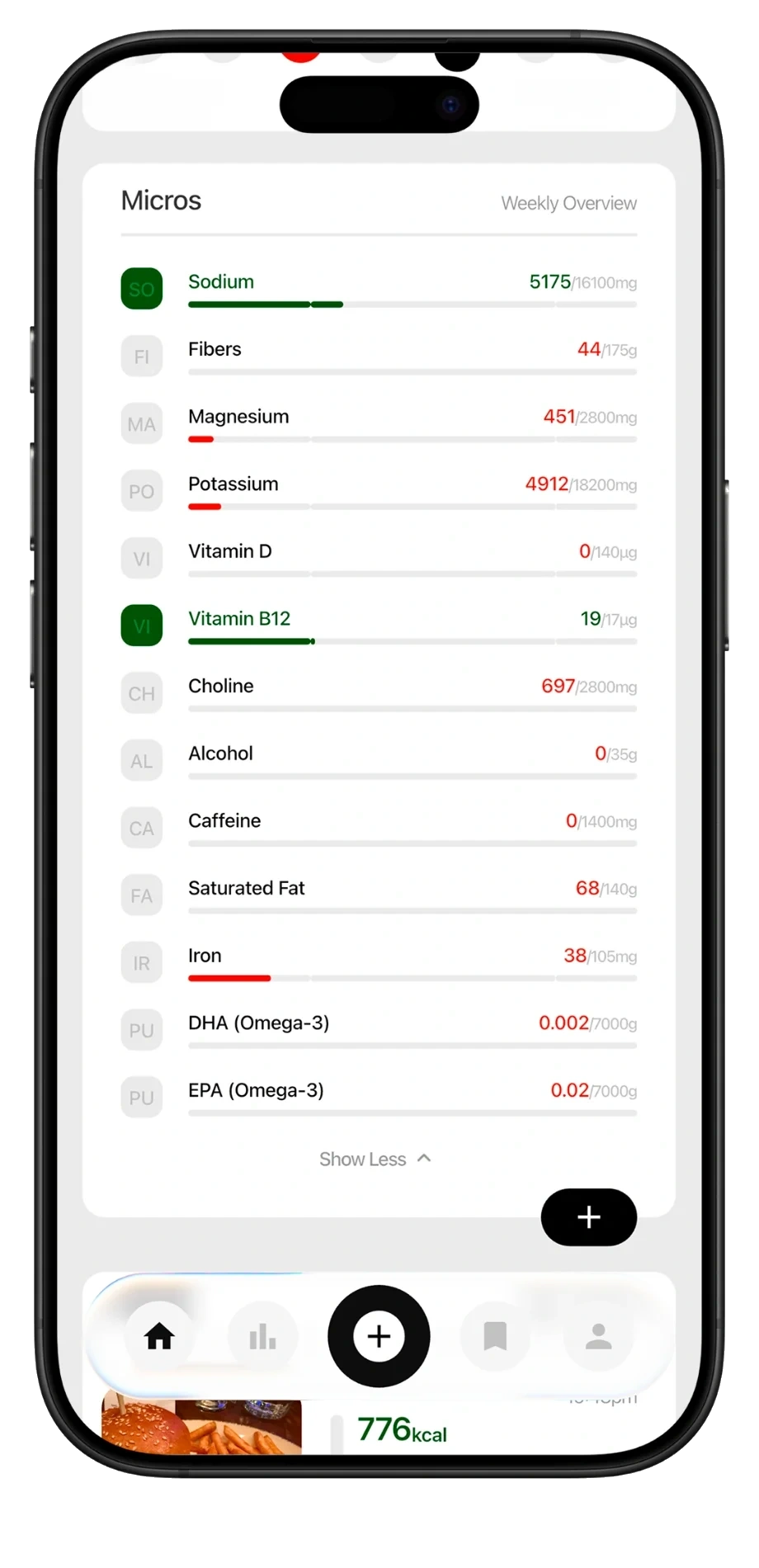
2,000 calories of junk food scores 20. 2,000 calories of real food scores 95.
This is what calorie counting misses entirely. You can eat exactly 2,000 calories of fast food — hit your calorie target perfectly — and still be nutritionally bankrupt. Low protein, zero micronutrient coverage, no dietary diversity. Health Score: 20.
Or you can eat 2,000 calories of nutrient-dense whole foods — lean proteins, colorful vegetables, whole grains, healthy fats — and cover the vast majority of your micronutrient needs. Health Score: 95.
Same calories. Completely different nutritional reality. Health Score captures what every other metric misses: the quality of your nutrition, not just the quantity.
Stop counting calories.
Start measuring nutrition.
Your Health Score is waiting. See how well you’re really eating — across macros, 245 micronutrients, and dietary diversity.