How Açaí turns a photo into 245 data points
Most nutrition apps make you search databases and guess portion sizes. Açaí’s proprietary AI engine does the work for you — from camera snap to complete nutritional breakdown in under 3 seconds.
Four stages, one photo, under 3 seconds
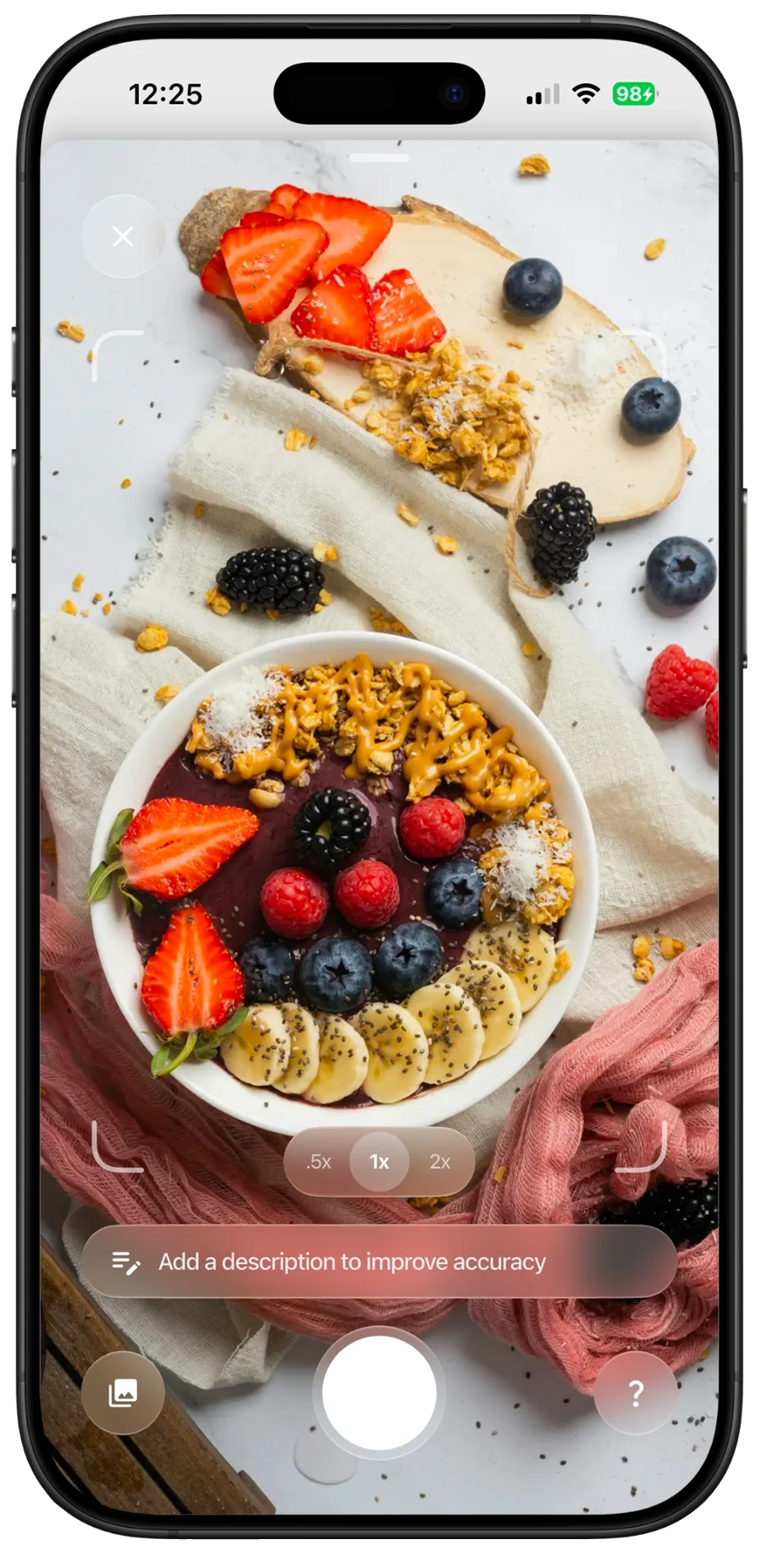
You photograph your meal
Open Açaí and snap a photo of any food — a restaurant plate, home-cooked dinner, smoothie, snack, or multi-course meal. You can optionally add a text hint (e.g., "grilled salmon with lemon butter") to boost accuracy on ambiguous dishes.
AI identifies every ingredient
Our proprietary computer vision engine analyzes the image and identifies every individual ingredient — the chicken breast, the olive oil, the cherry tomatoes, the feta. Each component is recognized separately, not as a generic "salad" or "bowl." Portion sizes and gram weights are estimated for each ingredient independently.
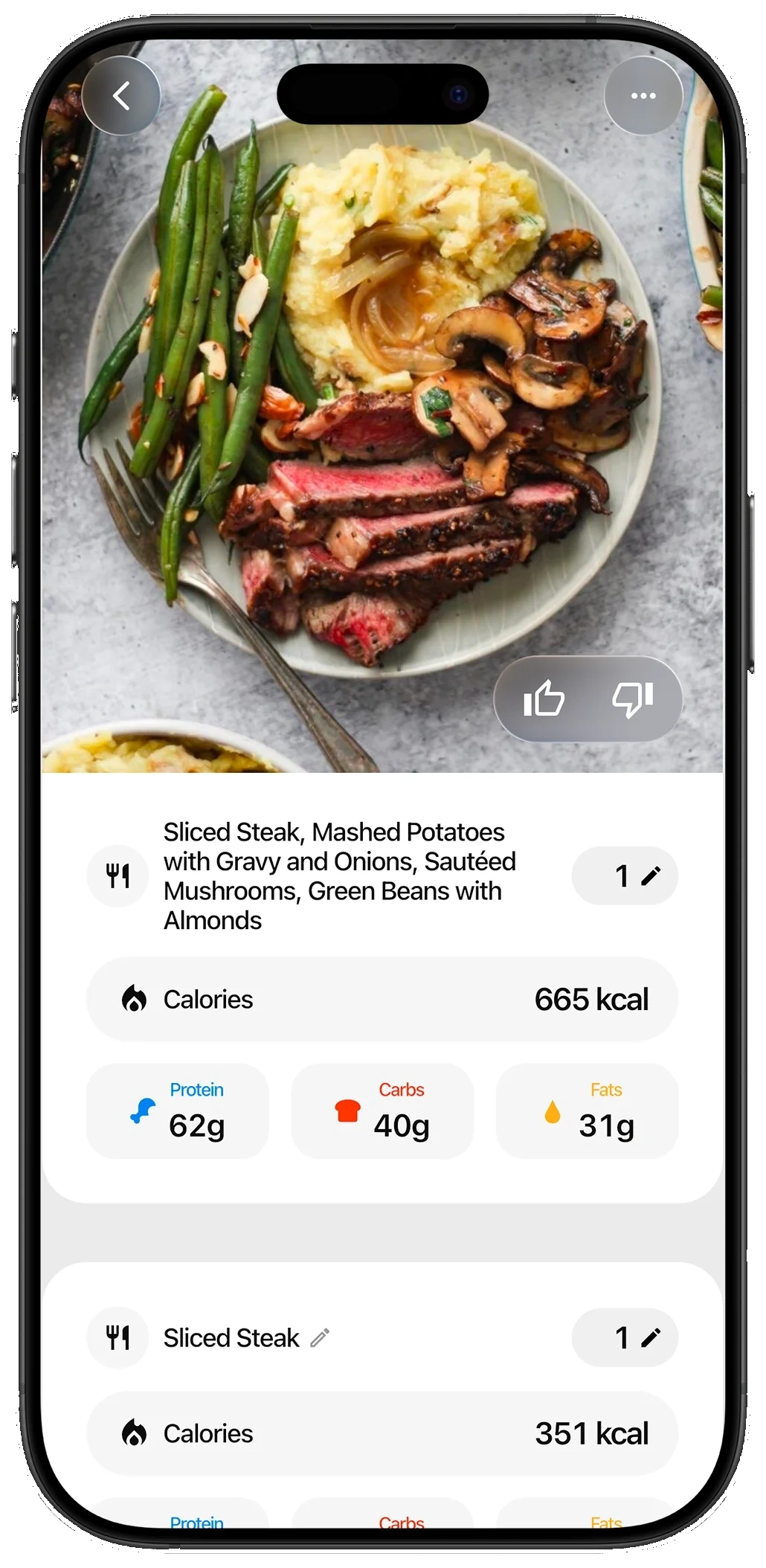
Nutritional database lookup
Every identified ingredient is cross-referenced against a structured nutritional database with complete micronutrient profiles. This isn’t a simple calorie lookup — Açaí maps each ingredient’s gram weight to precise values for calories, protein, carbs, fat, fiber, and 245 micronutrients including vitamins, minerals, amino acids, and trace elements.
Your full breakdown in under 3 seconds
The complete nutritional profile appears on your screen — per-ingredient breakdowns, meal totals, and percentage of your daily recommended intake for every nutrient. All from a single photograph, in less time than it takes to type "chicken salad" into a search bar.
Proprietary AI, not a generic API wrapper
Most “AI nutrition” apps send your photo to ChatGPT or Gemini and reformat the response. Açaí’s engine was built from scratch for one purpose: look at food and tell you exactly what’s in it.
Purpose-built vision
Every parameter in Açaí’s AI is tuned for food recognition. It doesn’t write poetry or answer trivia — it identifies ingredients and estimates portion sizes with surgical precision.
Structured nutritional data
Generic LLMs generate free-text calorie estimates. Açaí maps every ingredient to a structured database with 245 verified nutrient values — no hallucinated numbers.
Continuous improvement
Every scan makes the engine smarter. Açaí’s AI is constantly refined against real-world meal data — not fine-tuned on internet text.
The accuracy difference
When your AI is purpose-built for food, the numbers speak for themselves. Mean Absolute Error (MAE) in kilocalories — lower is better.
Measured across real-world meal photographs.
See full benchmark detailsHow macros are calculated
Açaí doesn’t guess your macros from a generic calorie estimate. Each macro value is computed bottom-up from ingredient-level data.
Ingredient-level precision
The AI identifies each ingredient and its gram weight. The nutritional database returns protein, carbs, and fat per gram for that specific food. Multiply by estimated weight, sum across all ingredients — that’s your meal total.
This means a chicken salad with olive oil dressing calculates the fat from the chicken, the fat from the olive oil, and the fat from the feta separately — not from a single “chicken salad” entry.
Calorie cross-validation
Açaí’s pipeline cross-checks that the calorie total aligns with the macro breakdown (protein × 4 + carbs × 4 + fat × 9). If there’s a discrepancy, the system flags it and adjusts — catching errors that manual loggers would miss.
Result: macro values you can actually trust for meal planning, deficit tracking, or hitting protein targets.
245 micronutrients — from every scan
This is what separates Açaí from every other nutrition tracker on the market. Not just calories and protein — the full nutritional picture.
A, B1, B2, B3, B5, B6, B9, B12, C, D, E, K
Iron, calcium, magnesium, zinc, selenium, potassium, phosphorus
Leucine, isoleucine, valine, lysine, tryptophan, methionine
Fiber types, fatty acids, cholesterol, choline, carotenoids, flavonoids
How it works technically
Once the AI identifies an ingredient (e.g., “spinach, 85g”), the system looks up the complete micronutrient profile for that food at that weight. Spinach at 85g contributes specific amounts of iron, folate, vitamin K, magnesium, manganese, and over 200 other measurable nutrients.
These values are summed across every ingredient in your meal, then mapped against your personalized RDA (Recommended Daily Allowance) targets — color-coded red, yellow, and green so you can see at a glance where you’re hitting your targets and where you have gaps.
How the weekly dashboard aggregates
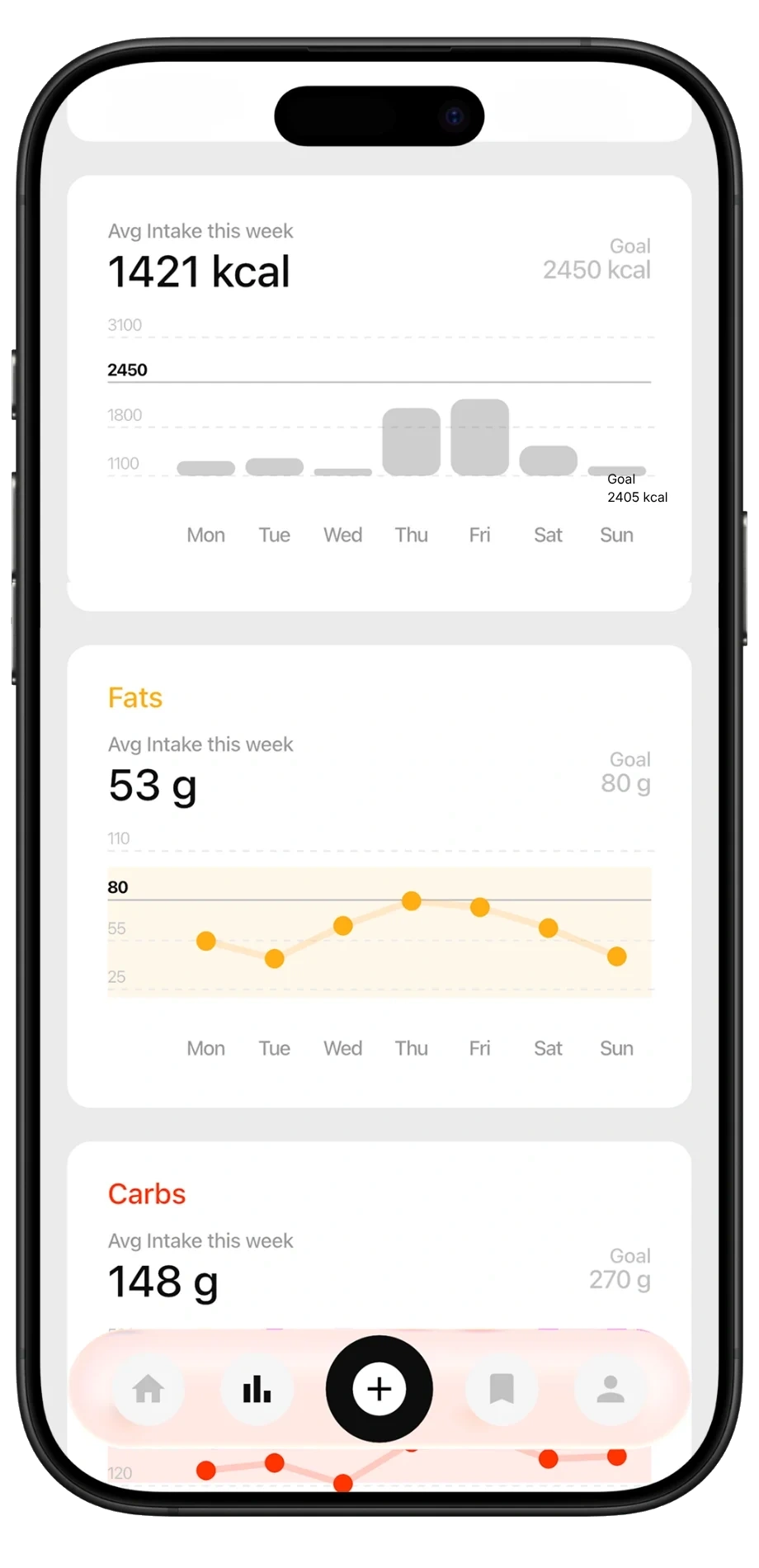
Individual scans are useful. Patterns over time are transformative. Açaí’s analytics dashboard aggregates every scan into actionable weekly and monthly insights.
Daily running totals
Calories, protein, carbs, and fat update in real time as you scan meals throughout the day.
7-day micronutrient trends
See which vitamins and minerals you consistently hit — and which ones you're consistently missing.
30-day macro averages
Weekly fluctuations smooth out over a month, revealing your true eating patterns — not just one good or bad day.
Goal tracking
Set targets for calories, protein, or specific micronutrients. The dashboard tracks your progress against those goals daily.
See it for yourself
Download Açaí free, scan your next meal, and watch 245 data points appear in under 3 seconds. No manual entry, no barcode scanning, no guesswork.